
Diet for PCOD: Best Foods to Eat, Foods to Avoid & Indian Diet Plan Recommended by a Gynecologist
A healthy PCOD diet focuses on high-fibre foods, lean protein, healthy fats, and low-glycemic carbohydrates while limiting sugar and processed foods. Following a balanced diet can improve insulin resistance, regulate menstrual cycles, support healthy weight management, and improve fertility when combined with regular exercise and appropriate medical care.
Diet for PCOD: Best Foods, Foods to Avoid, Indian Diet Plan & Lifestyle Tips for Managing PCOD
Being diagnosed with Polycystic Ovarian Disease (PCOD) can leave you with many questions. You may have been advised to lose weight, avoid sugary foods, or “eat healthy,” but knowing where to start isn’t always easy.
The truth is that there is no single diet that cures PCOD, but making the right dietary choices can significantly improve symptoms, regulate hormones, and reduce the risk of long-term health complications. Since PCOD affects every woman differently, your nutritional needs should also be personalized.
Whether you’re experiencing irregular periods, acne, unwanted facial hair, weight gain, or difficulty conceiving, adopting a balanced, sustainable eating pattern can make a meaningful difference.
At Dr. Aayushi Clinic in Dwarka, we believe that effective PCOD management combines evidence-based medical care with practical lifestyle changes. Along with diagnosis and treatment, we guide women on nutrition, exercise, and healthy habits that support long-term hormonal balance and reproductive health.
In this comprehensive guide, you’ll learn:
- What to eat if you have PCOD
- Foods that may worsen symptoms
- A practical Indian diet plan
- Whether weight loss really helps
- Common diet mistakes to avoid
- When to consult a gynecologist
Women's health conditions such as polycystic ovary syndrome (PCOS), irregular menstrual cycles, infertility, and iron-deficiency anaemia are increasingly affecting women during their reproductive years. According to the World Health Organization (WHO), PCOS affects an estimated 10–13% of women of reproductive age, yet up to 70% of cases remain undiagnosed worldwide. Additionally, infertility affects approximately 1 in 6 people globally at some point in their lives. These growing health concerns have encouraged many women to adopt preventive lifestyle measures, including balanced nutrition, regular physical activity, and mind-body practices like yoga, which can support physical, emotional, and reproductive well-being alongside appropriate medical care.
What is PCOD?
Polycystic Ovarian Disease (PCOD) is a common hormonal condition that affects women of reproductive age. In PCOD, the ovaries may develop multiple immature follicles that do not mature properly, leading to hormonal imbalance and irregular ovulation.
While the exact cause isn’t fully understood, factors such as insulin resistance, genetics, chronic inflammation, and hormonal imbalances play an important role.
Common symptoms include:
- Irregular or missed periods
- Weight gain, especially around the abdomen
- Difficulty losing weight
- Acne and oily skin
- Excess facial or body hair
- Hair thinning or hair loss
- Difficulty conceiving
- Dark patches of skin around the neck or underarms (acanthosis nigricans)
If left unmanaged, PCOD may increase the risk of type 2 diabetes, high cholesterol, high blood pressure, metabolic syndrome, infertility, and endometrial problems over time.
The good news is that early diagnosis, healthy lifestyle changes, and appropriate medical treatment can help manage symptoms effectively and reduce these long-term risks.
Why Does Diet Matter in PCOD?
Diet plays a much bigger role in PCOD than simply helping with weight loss.
Many women with PCOD have insulin resistance, a condition in which the body’s cells become less responsive to insulin. As a result, the pancreas produces more insulin to keep blood sugar under control.
Higher insulin levels stimulate the ovaries to produce more androgens (male hormones), which can worsen symptoms such as irregular periods, acne, unwanted hair growth, and difficulty ovulating.
A balanced diet helps by:
- Improving insulin sensitivity
- Keeping blood sugar levels stable
- Reducing inflammation
- Supporting healthy ovulation
- Improving menstrual regularity
- Managing body weight
- Supporting fertility
Even women with a normal body weight can benefit from dietary changes because insulin resistance can occur regardless of weight.
Can Diet Really Help Balance Hormones?
Yes, but it’s important to have realistic expectations.
Diet cannot “cure” PCOD or permanently eliminate hormonal imbalances. However, healthy eating can support your body’s natural hormone regulation and improve the effectiveness of medical treatment.
Research has shown that balanced nutrition may help:
- Improve insulin resistance
- Reduce circulating androgen levels
- Restore more regular ovulation
- Improve menstrual cycles
- Reduce inflammation
- Improve cholesterol levels
- Support healthy pregnancy planning
- Lower the risk of diabetes
For women who are overweight, even losing 5–10% of body weight can significantly improve menstrual regularity and ovulation. However, the goal should be sustainable lifestyle changes rather than crash diets or rapid weight loss.
Best Foods to Eat for PCOD
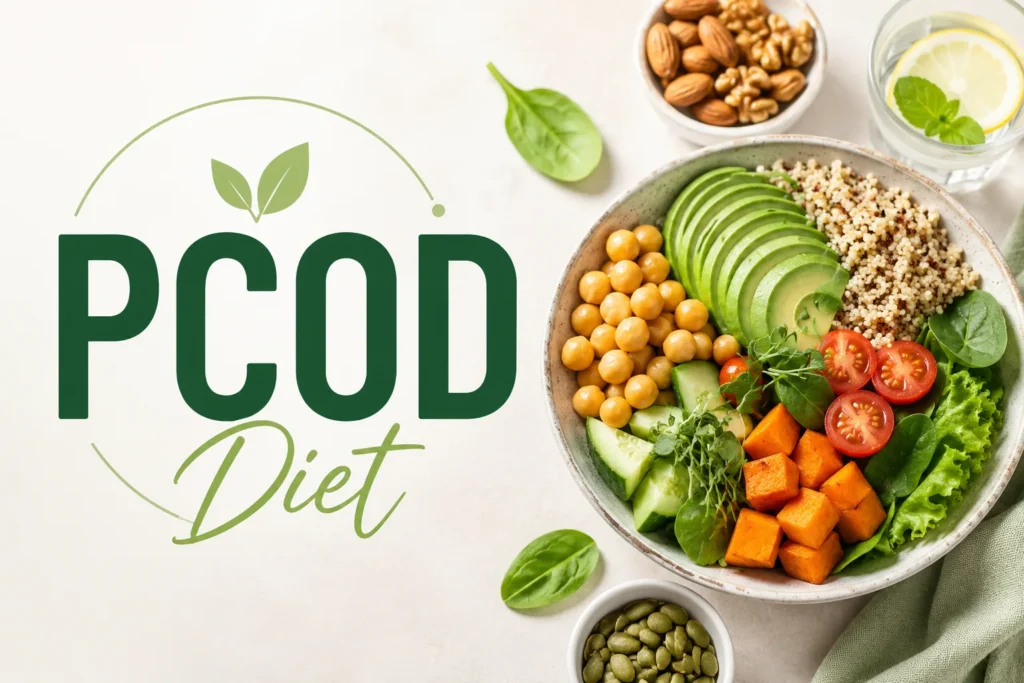
A healthy PCOD diet should include foods that stabilize blood sugar, reduce inflammation, and provide essential nutrients for hormone production.
1. High-Fibre Foods
Fibre slows down the absorption of sugar into the bloodstream, helping prevent sudden spikes in blood glucose and insulin levels.
Choose foods such as:
- Oats
- Brown rice
- Whole wheat
- Millets (ragi, bajra, jowar)
- Quinoa
- Barley
- Lentils
- Chickpeas
- Kidney beans
- Green leafy vegetables
- Broccoli
- Cauliflower
- Carrots
- Cucumbers
Aim to include vegetables in at least half of your lunch and dinner plate.
2. Lean Protein
Protein helps you stay full for longer, supports muscle health, and reduces cravings that often occur due to fluctuating blood sugar levels.
Healthy protein sources include:
- Eggs
- Fish
- Skinless chicken
- Paneer
- Tofu
- Greek yogurt
- Low-fat curd
- Soybeans
- Sprouts
- Dal
- Moong
- Rajma
- Chana
Including protein in every meal can also help improve satiety and prevent overeating.
3. Healthy Fats
Healthy fats support hormone production and may help reduce inflammation.
Choose:
- Almonds
- Walnuts
- Pistachios
- Chia seeds
- Flaxseeds
- Pumpkin seeds
- Sesame seeds
- Olive oil
- Mustard oil (in moderation)
- Avocados
Instead of avoiding fats completely, focus on replacing unhealthy fats with healthier options.
4. Low Glycemic Index (GI) Foods
Low-GI foods release glucose slowly into the bloodstream, helping maintain stable energy levels throughout the day.
Good choices include:
|
Low GI Foods |
Benefits |
|
Oats |
Stable blood sugar |
|
Apples |
High fibre |
|
Guava |
Rich in vitamin C |
|
Pears |
Low sugar |
|
Sweet potatoes |
Complex carbohydrates |
|
Lentils |
High protein and fibre |
|
Brown rice |
Better glucose control |
|
Millets |
Rich in nutrients |
These foods are often better choices than refined grains and sugary snacks.
5. Anti-Inflammatory Foods
Low-grade inflammation is common in women with PCOD and may contribute to worsening symptoms.
Foods rich in antioxidants and healthy fats may help reduce inflammation.
Include:
- Tomatoes
- Spinach
- Kale
- Turmeric
- Ginger
- Green tea
- Berries
- Citrus fruits
- Garlic
Adding herbs and spices such as turmeric and ginger to everyday meals is a simple way to enhance both flavour and nutritional value.
6. Fruits That Are Generally Good Choices for PCOD
Many women avoid fruit because they worry about sugar content. However, whole fruits also provide fibre, vitamins, minerals, and antioxidants.
Some good options include:
- Apples
- Pears
- Guava
- Oranges
- Kiwi
- Berries
- Pomegranate
- Papaya
Instead of fruit juices, choose whole fruits to benefit from their natural fibre.
Foods to Avoid If You Have PCOD
No food needs to be completely banned forever, but some foods are best limited because they can worsen insulin resistance, inflammation, and weight gain.
|
Limit These Foods |
Healthier Alternatives |
|
White bread |
Whole wheat bread |
|
White rice (large portions) |
Brown rice or millets |
|
Sugary drinks |
Water, buttermilk, lemon water |
|
Cakes and pastries |
Fresh fruit |
|
Candy and chocolates |
Nuts or roasted seeds |
|
Deep-fried snacks |
Roasted makhana or chana |
|
Packaged chips |
Homemade popcorn |
|
Sweet breakfast cereals |
Oats or muesli |
It’s also a good idea to reduce your intake of highly processed foods, fast food, and sugary beverages, as these may contribute to blood sugar fluctuations and inflammation.
Expert Tip from Dr. Aayushi
The best PCOD diet is one you can follow consistently, not an overly restrictive plan that is difficult to maintain. Small, sustainable changes such as eating balanced meals, choosing whole foods, staying physically active, and getting adequate sleep can have a significant impact on hormonal health over time.
7-Day Indian PCOD Diet Plan
There isn’t a one-size-fits-all diet for PCOD. However, a balanced Indian meal plan that includes whole grains, lean proteins, healthy fats, and fibre can help support hormonal health and maintain stable blood sugar levels.
|
Day |
Breakfast |
Lunch |
Evening Snack |
Dinner |
|
Monday |
Vegetable oats with curd |
Multigrain roti, dal, mixed vegetables & salad |
Roasted chana |
Grilled paneer with sautéed vegetables |
|
Tuesday |
Moong dal chilla with mint chutney |
Brown rice, rajma & cucumber salad |
Apple with almonds |
Vegetable soup & whole wheat toast |
|
Wednesday |
Vegetable poha with sprouts |
Bajra roti, palak paneer & salad |
Buttermilk |
Grilled fish/chicken with vegetables |
|
Thursday |
Greek yogurt with fruits & seeds |
Quinoa pulao with vegetables |
Roasted makhana |
Tofu stir-fry with vegetables |
|
Friday |
Besan chilla with curd |
Millet khichdi with salad |
Guava |
Mixed vegetable curry with roti |
|
Saturday |
Boiled eggs & whole wheat toast |
Brown rice with chole |
Green tea & walnuts |
Vegetable dal soup |
|
Sunday |
Idli with sambar |
Grilled chicken/paneer with vegetables |
Fruit bowl |
Light khichdi with curd |
Tip: Portion sizes should be personalized based on your age, activity level, body weight, and overall health. If you’re planning a pregnancy or managing other medical conditions, consult your gynecologist or a registered dietitian before making significant dietary changes.
Best Breakfast Options for Women with PCOD
Breakfast helps replenish energy after an overnight fast and may support stable blood sugar levels throughout the day. Skipping breakfast can lead to overeating later and make healthy food choices more difficult.
Some nutritious breakfast ideas include:
- Moong dal chilla with curd
- Vegetable oats
- Besan chilla with mint chutney
- Vegetable poha with sprouts
- Whole wheat toast with peanut butter and boiled eggs
- Greek yogurt with chia seeds and berries
- Vegetable upma with peanuts
- Paneer stuffed multigrain roti
Aim to include protein and fibre in your breakfast to help you feel full for longer.
Can Diet Help with Weight Loss in PCOD?
Weight management is often recommended for women with PCOD who are overweight or obese because excess body fat can worsen insulin resistance and hormonal imbalance.
However, it’s important to remember that not every woman with PCOD is overweight, and weight loss should never be the only goal of treatment.
For those who do need to lose weight, even a modest reduction of 5–10% of body weight has been associated with improvements in menstrual regularity, ovulation, and insulin sensitivity.
Instead of restrictive diets, focus on:
- Eating balanced meals
- Controlling portion sizes
- Staying physically active
- Avoiding sugary drinks
- Sleeping 7–8 hours each night
- Managing stress
Sustainable habits are far more effective than crash diets, which often lead to weight regain and nutritional deficiencies.
Can Diet Improve Fertility in Women with PCOD?
One of the most common concerns among women with PCOD is whether dietary changes can improve their chances of becoming pregnant.
The answer is diet can support fertility, but it is not a substitute for medical treatment when fertility issues are present.
By improving insulin sensitivity and supporting a healthy body weight, a balanced diet may help:
- Promote more regular ovulation
- Improve menstrual cycle regularity
- Reduce inflammation
- Support egg quality
- Improve metabolic health before pregnancy
If you’ve been trying to conceive for 6–12 months without success (or sooner if you’re over 35), it’s important to seek evaluation by a gynecologist or fertility specialist.
At Dr. Aayushi Clinic, we assess your hormonal health, menstrual patterns, and fertility goals to develop a personalized treatment plan rather than relying on diet alone.
Lifestyle Changes That Work Along with Diet
Diet is only one part of effective PCOD management. Healthy lifestyle habits can complement nutritional changes and improve overall well-being.
Stay Physically Active
Aim for at least 150 minutes of moderate-intensity exercise per week, such as brisk walking, cycling, swimming, or dancing.
Include Strength Training
Resistance exercises performed two to three times per week can help build muscle and improve insulin sensitivity.
Get Enough Sleep
Poor sleep may affect hunger hormones, insulin sensitivity, and stress levels. Aim for 7–9 hours of quality sleep each night.
Manage Stress
Chronic stress can influence hormone regulation. Practices such as yoga, meditation, deep breathing, or spending time on hobbies may help reduce stress.
Stay Hydrated
Choose water, coconut water (in moderation), or unsweetened beverages instead of sugary drinks.
Common Diet Mistakes Women with PCOD Should Avoid
Many women unknowingly follow dietary advice that may not be helpful or sustainable.
Avoid these common mistakes:
- Skipping meals to lose weight quickly
- Following fad or detox diets
- Eliminating all carbohydrates
- Drinking fruit juices instead of eating whole fruits
- Depending only on supplements without medical advice
- Eating large portions of “healthy” foods
- Frequently consuming packaged snacks labelled as “low-fat”
- Ignoring exercise, sleep, and stress management
Remember, consistency is more important than perfection.
When Should You Consult a Gynecologist for PCOD?
Lifestyle changes are valuable, but some symptoms require medical evaluation.
You should consult a gynecologist if you experience:
- Irregular or absent periods
- Difficulty conceiving
- Excess facial or body hair
- Persistent acne despite treatment
- Rapid weight gain
- Hair thinning or excessive hair loss
- Pelvic pain
- Heavy or prolonged menstrual bleeding
- Symptoms that continue despite healthy lifestyle changes
Early diagnosis and treatment can help prevent complications such as infertility, diabetes, and endometrial problems.
Why Choose Dr. Aayushi Clinic for PCOD Treatment in Dwarka?
Managing PCOD isn’t just about prescribing medication, it’s about understanding each woman’s symptoms, health goals, and lifestyle.
At Dr. Aayushi Clinic, we provide personalized care for women dealing with PCOD, irregular periods, hormonal imbalances, and fertility concerns. Every treatment plan is tailored after a detailed assessment rather than using a one-size-fits-all approach.
Patients from Dwarka, Palam, Janakpuri, Uttam Nagar, Najafgarh, Delhi Cantonment, and nearby areas trust Dr. Aayushi for compassionate, evidence-based women’s healthcare.
Our approach includes:
- Comprehensive gynecological evaluation
- Hormonal assessment
- Ultrasound examination when required
- Menstrual disorder management
- Nutrition and lifestyle guidance
- Weight management support
- Preconception counselling
- Fertility evaluation and treatment planning
- Regular follow-up to monitor progress
Whether your goal is to regulate your menstrual cycle, improve hormonal health, or prepare for pregnancy, our focus is on creating a realistic and sustainable plan that supports your long-term well-being.
Frequently Asked Questions
1. What is the best diet for PCOD?
A diet rich in vegetables, fruits, whole grains, lean protein, healthy fats, and high-fibre foods while limiting refined sugar and processed foods is generally recommended for women with PCOD.
2. Which fruit is best for PCOD?
Apples, guava, pears, berries, oranges, kiwi, and pomegranate are nutritious choices because they provide fibre, vitamins, and antioxidants.
3. Can I eat rice if I have PCOD?
Yes. Rice can be included in moderation as part of a balanced meal. Choosing brown rice or pairing rice with protein and vegetables may help reduce blood sugar spikes.
4. Is banana good for PCOD?
Bananas can be included in moderation. Pairing them with nuts or yogurt may help slow the absorption of natural sugars.
5. Is milk good for PCOD?
Low-fat, unsweetened milk or yogurt can be part of a balanced diet for many women. Individual tolerance may vary.
6. Can diet cure PCOD?
No. Diet helps manage symptoms and supports hormonal health but does not cure PCOD. Medical treatment may also be required depending on your symptoms and health goals.
7. How much exercise is recommended?
Most women benefit from at least 150 minutes of moderate exercise per week, along with strength training twice a week.
8. When should I see a gynecologist?
If you have irregular periods, difficulty conceiving, persistent acne, excess hair growth, or symptoms that interfere with your daily life, schedule a medical evaluation.
Conclusion
Managing PCOD is not about following strict diets or eliminating entire food groups. It’s about building sustainable habits that support hormonal balance, improve insulin sensitivity, and promote overall health.
A balanced diet, regular physical activity, adequate sleep, and timely medical care can make a meaningful difference in managing symptoms and reducing the risk of long-term complications.
If you’re experiencing irregular periods, unexplained weight gain, acne, excessive hair growth, or planning a pregnancy, don’t ignore the signs. Early diagnosis and personalized care can help you take control of your health with confidence.
At Dr. Aayushi Clinic in Dwarka, we’re committed to helping women make informed decisions about their reproductive and hormonal health through compassionate, evidence-based care tailored to their individual needs.
References
- World Health Organization (WHO) – Polycystic Ovary Syndrome (PCOS) Fact Sheet
- National Family Health Survey (NFHS-5), Ministry of Health & Family Welfare, Government of India
- Indian Council of Medical Research (ICMR)
- American College of Obstetricians and Gynecologists (ACOG) – Exercise During Pregnancy
- Ministry of Health & Family Welfare, Government of India
Schedule a consultation if you would like personalized guidance.
If your symptoms feel persistent or confusing, seeking guidance from an experienced gynaecologist in Dwarka can provide clarity and reassurance. Early evaluation and the right PCOD treatment can significantly improve hormonal balance and overall well-being over time. Schedule your consultation with Dr. Aayushi today.
Take the first step toward hormonal balance, improved fertility, and long-term wellness.
Also Read
- Understanding & Managing Your PMS
- Navigating Menopause: Your Personalized Path to Well-being at Dr. Aayushi Clinic
- Understanding Endometriosis: Expert Care at Dr. Aayushi Clinic, Dwarka, Delhi
- Beyond the Diagnosis: Empowering Your Journey with Gestational Diabetes at Dr. Aayushi Clinic
- Beyond the Buzz: The Real Impact of the HPV Vaccine at Dr. Aayushi Clinic, Dwarka, Delhi
Contact Us
Get in touch today
Schedule your appointment now!
Visit Today
We offer advanced, patient-focused women’s healthcare.
Address:
Flat No 20, Ground Floor, Rose Apartments, Sector -18B, Dwarka, New Delhi.
Timings:
Monday to Saturday Evening : 6:30 pm – 8:30 pm
Sunday Afternoon/Evening : 2 PM to 7 PM (By Appointment)
The information provided on this page is for general educational purposes only and should not be considered medical advice. It is essential to consult with a qualified healthcare professional like Dr. Aayushi for any health concerns or before making any decisions related to your health or treatment.